Black-winged Kite

During my recent visits to Horton Plains National Park, the Black-winged Kite has become a regular feature of the landscape. These elegant raptors, often perched on the distant Maha Rathmal trees, can typically be spotted from the car park or near Kalu Palama. However, this time brought a delightful surprise — we observed one gracefully hovering near the Mahaeliya Bungalow. Even better, a pair of these kites was present, with one landing on a Maha Rathmal tree close to the road, just before the Sri Pada viewpoint, offering us an excellent opportunity to capture a stunning habitat shot.

Black-winged kite roosted on a Maharathmal tree, Horton Plains National Park

Interestingly, the raptor population in Horton Plains seems to be on the rise. Alongside the Black-winged Kite, Steppe Buzzards, Brahminy Kites, Serpent Eagles, and the majestic Black Eagle are now frequent sightings. While this is thrilling for bird enthusiasts, it poses a significant challenge for the park’s lizard populations, which now face predation pressures from these growing numbers of raptors. Combined with the increasing crow population, the balance of the ecosystem faces a new test from these formidable aerial hunters.

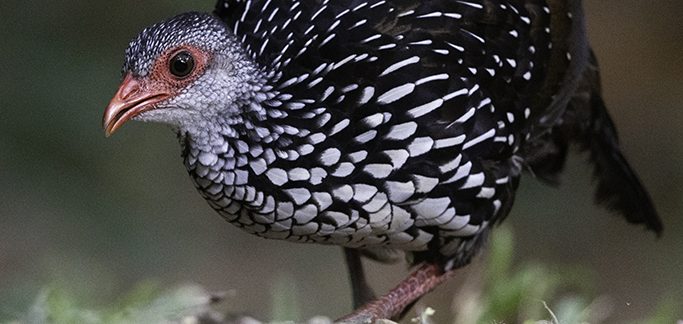
Sri Lanka Spurfowl (Galloperdix bicalcarata)

The Sri Lanka Spurfowl (Galloperdix bicalcarata) is a ground-dwelling bird species endemic to Sri Lanka, found primarily in dense forests and woodland areas. It belongs to the pheasant family, Phasianidae. The male spurfowl is distinguished by its dark brown plumage with a speckled pattern, a red facial patch, and prominent spurs on its legs, while females are duller in color with more subtle markings. Known for their shy and elusive nature, these birds are more often heard than seen, making sharp, loud calls, especially at dawn and dusk. They feed on insects, seeds, and small invertebrates, foraging in leaf litter.
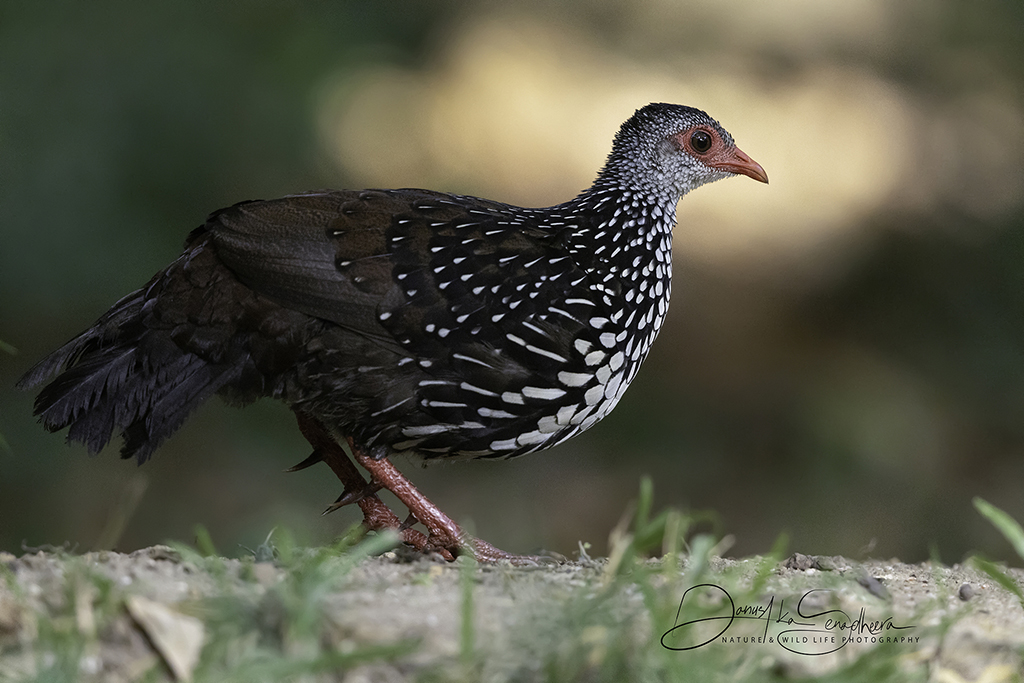
Photographing these birds in wildness is very challenging as they live in dense undergrowth with very little light supporting photography. However they are use to come to some home gardens for food near forest patches around wet-zone forests like Sinharaja, Kanneliya, Makandawa, Nilgala, etc. With proper approach we can observe and photograph these birds when they come to home gardens with better lighting conditions. This was taken during my last visit to Nilgala.
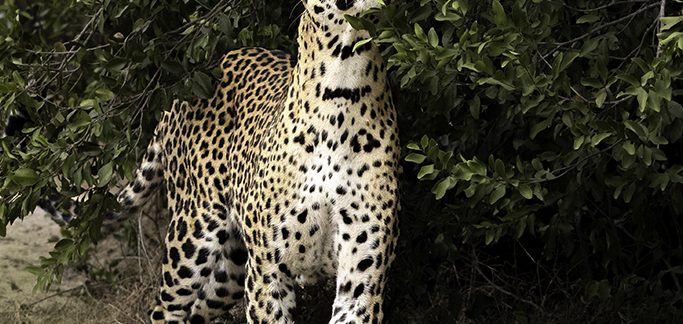
Encounter Rana (KLM29) on a territory walk

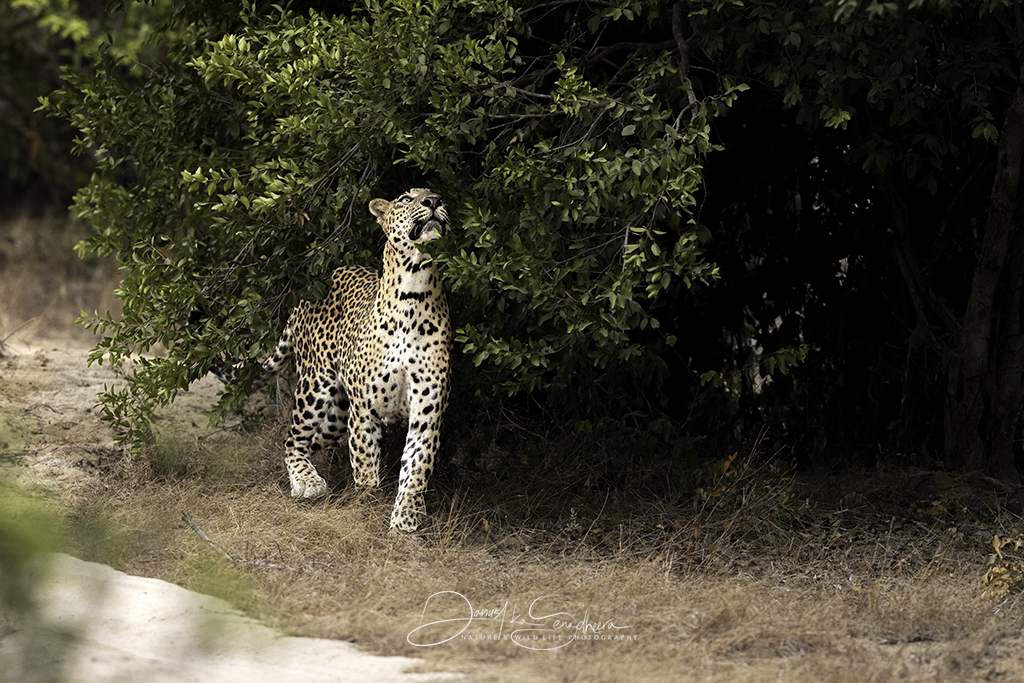
It was early in the morning, and we were the second safari jeep to enter Kumana National Park. Our wildlife guide, Sasika, and safari driver, Pradeep, decided to turn onto Kiripokuna Road while the other jeep continued on the main road. As we reached the third bund on Kiripokuna Road, both Shashika and Pradeep pointed toward the road where a leopard was crossing toward the bund. We gave it some room, and it returned to the road. It was a mature male leopard, later identified as Rana (KLM29).

Rana (KLM29) sniffing to mark territory

Seeing Rana in his natural habitat, performing these instinctual activities, was an unforgettable experience. His powerful presence and the way he navigated his domain with confidence left us in awe. This encounter, albeit brief, offered a rare and intimate glimpse into the life of one of Kumana’s most elusive and majestic residents.

Rana (KLM29) on the road

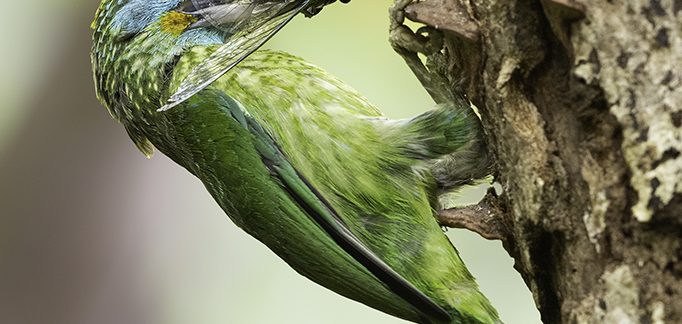
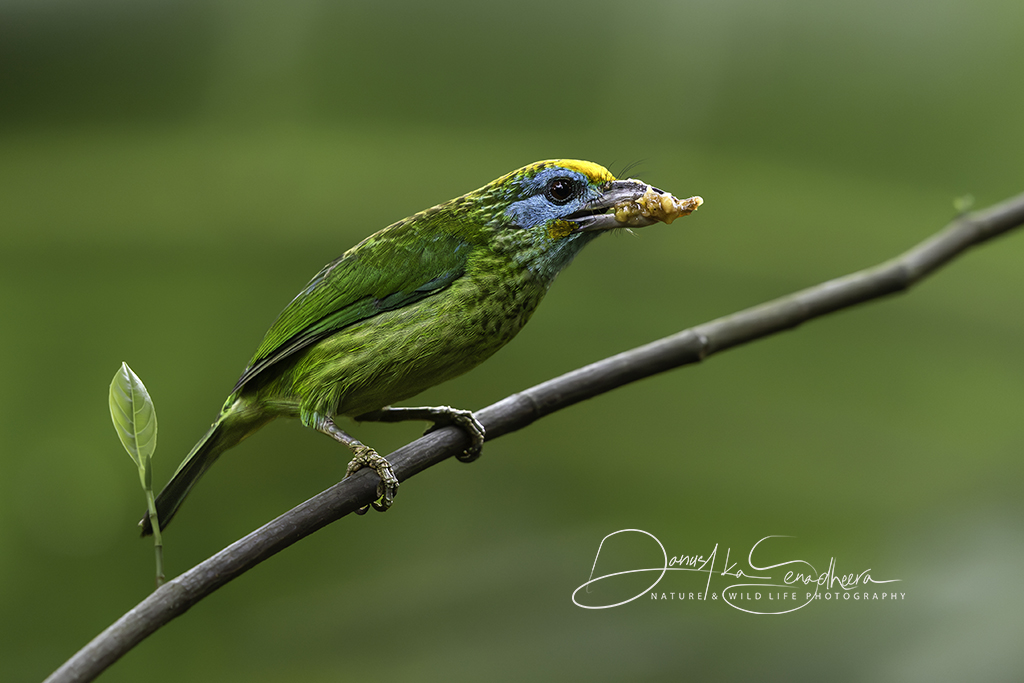
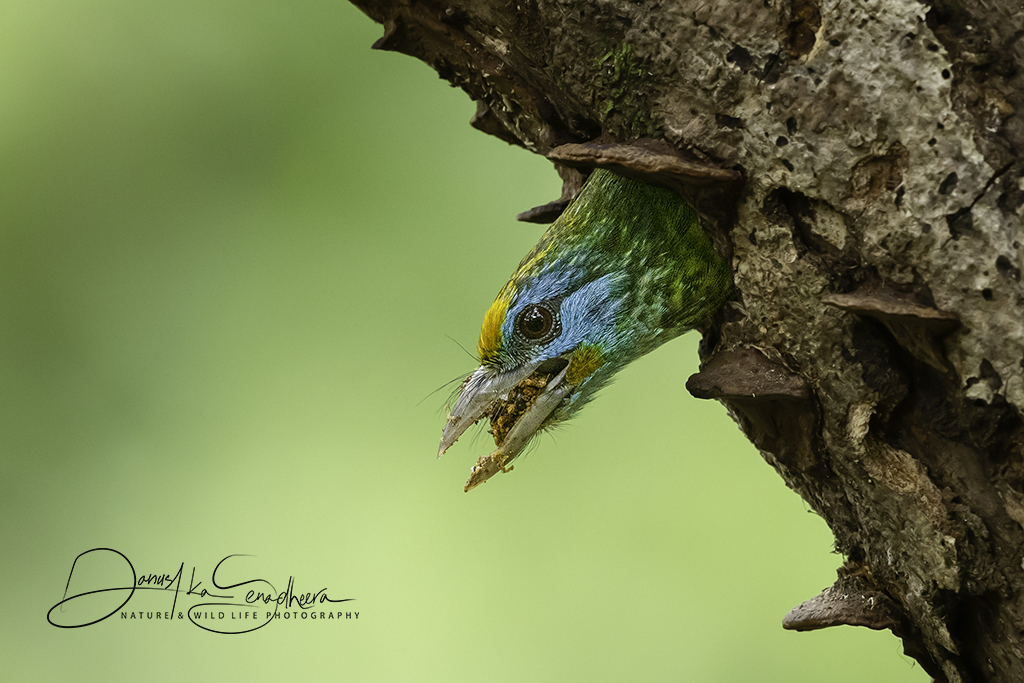
Yellow-fronted Barbet near Sinharaja Rain Forest

Yellow-fronted Barbet endemic to Sri Lanka

The yellow-fronted barbet is a small, endemic species in Sri Lanka, found primarily in the wet lowlands of the country. They typically appear in pairs and can be easily identified by their distinctive yellow foreheads. These birds are commonly seen in small forested areas and well-wooded home gardens, where they often visit bird feeders. Their diet mainly consists of wild berries, but when feeding their chicks, they rely on a diverse array of foods, including worms, insects, and wild berries.

Like other barbet species, yellow-fronted barbets nest in holes created in dead trees or dead tree branches. Their usual nesting period is from February to May, during which they lay 2-3 eggs. Both parents are actively involved in nesting duties, from feeding to cleaning, a process that takes about two months.

I recently encountered a nesting pair last March in a home garden near the Kudawa entrance to the Sinharaja Rainforest. By the time I arrived, the eggs had already hatched, and the parents were busy feeding their chicks. From the vantage point of an outdoor kitchen, the nest and perches were clearly visible. This position provided me with enough cover and shelter from the rain, allowing me to observe without disturbing the birds or getting wet during occasional showers. It is very important to not to disturb nesting birds due to many which could lead them abandoning nest as well as other animals destroying nests. It is always recommended to be hidden while observing nests not only from nesting birds but also from other predatory animals.

One of the parents removing waste from nest

Although the light was less than ideal due to the rainy weather, I noticed that feeding activities were more frequent during breaks in the rain. I was fortunate enough to capture some beautiful photos while enjoying a cup of tea with homemade pure jaggery, just before the sun decided to hide completely for the day. This experience was a delightful blend of nature observation and personal enjoyment, made even more special by the charming behavior of the yellow-fronted barbets.

One of the parents bring food to nest

Explore truskers in central Sri Lanka

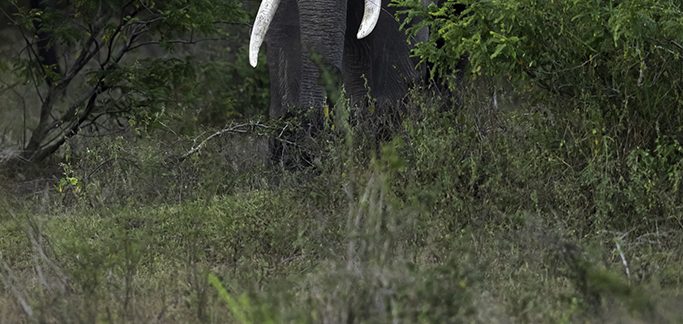
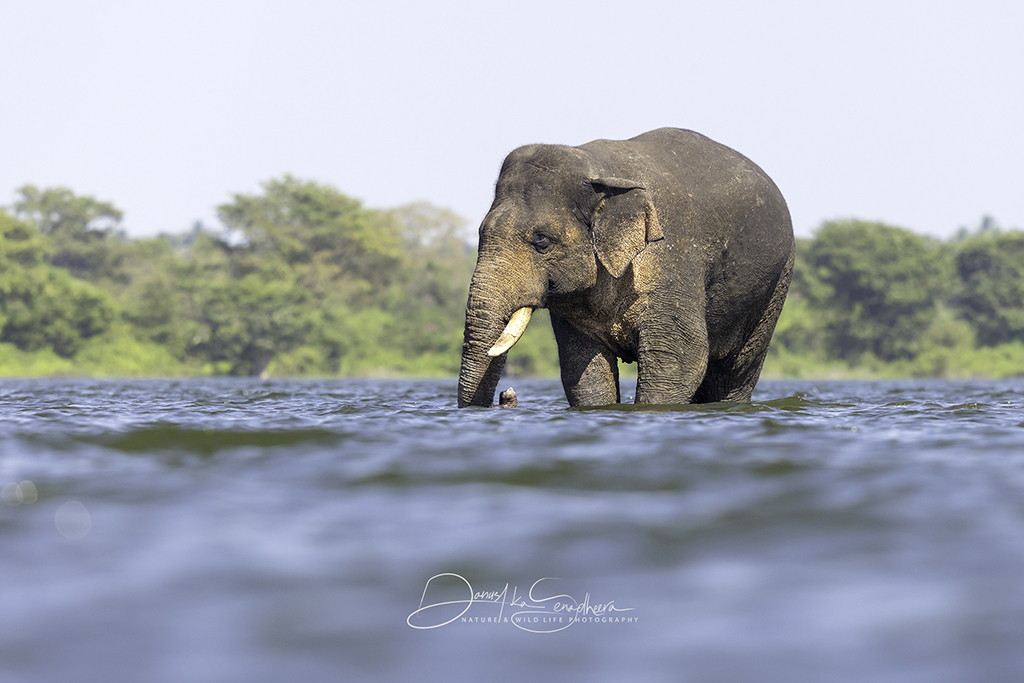
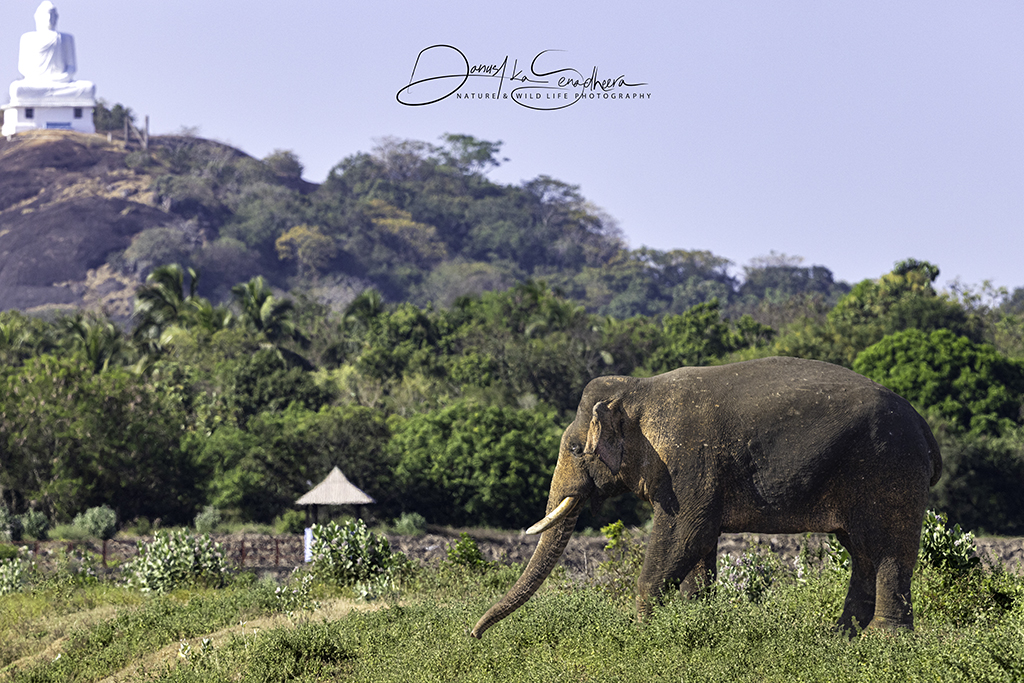
Even though elephants are not rare in Sri Lanka, elephants with tusks are a rare occurrence in this island nation. Likely due to poaching, trophy hunting, and the domestication of wild elephants, the gene associated with having tusks has become rare among the population. While more than 50% of male elephants in neighboring India have tusks, in Sri Lanka, less than 15% of male elephants bear tusks. Even today, tusked elephants remain vulnerable due to the black market demand for ivory.

The central part of Sri Lanka has the highest population of these remaining magnificent tuskers. Finding and photographing these elephants is an adventure in itself, as males only join herds during their mating period, a time when they are quite aggressive. Despite our contacts in nearby villages keeping an eye out for them, locating these elephants in the many scattered forest patches is quite challenging. However, during our last expedition in March 2024, we managed to find two of these majestic giants.

One tusker was spotted right in the middle of a huge lake. A crowd had gathered to see it, and we waited about two hours for it to come closer so we could take some decent photographs. Finally, it approached the lake’s bank, allowing us to capture some great shots.

Single tusker in the middle of a lake
Single tusker on top of the bank of a lake

The tusker known as Ratta, still in its youth, proved particularly elusive. Just as we were about to give up around five in the evening, we received a lead from a villager and decided to give it one last try. When we arrived at the location, there it was, with a herd of about ten elephants. Ratta was very aggressive, but just before the light faded, we managed to capture a few snaps of this beautiful creature.

Tusker known as Ratta peaking from a forest patch

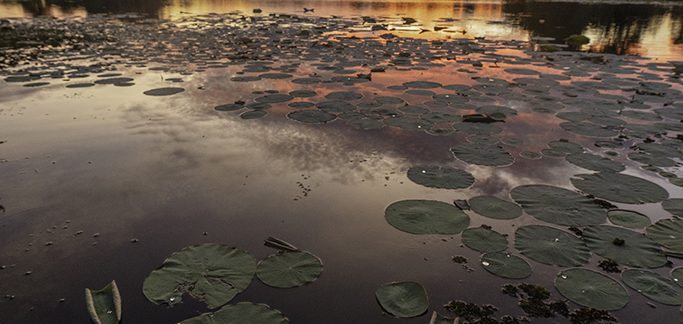
Sunset over Lake Heenwewa

Heenwewa, one of the many man-made water reservoirs nestled within Yala National Park, stands as a testament to the ingenuity of ancient Sri Lankans. These reservoirs, meticulously constructed, were vital for storing water during the dry season, primarily to sustain agriculture. Scattered across the dry zone of the country, they are a remarkable feature of Sri Lanka’s landscape.

Heenwewa holds a special charm, as it is accompanied by a Wildlife Bungalow situated right on its banks. My stay at this bungalow afforded me a unique opportunity to witness and capture the serene beauty of the lake. As the sun dipped below the horizon, the sky exploded in a symphony of colors, reflecting off the tranquil waters of Heenwewa. The surface, adorned with delicate water lily leaves, mirrored the vibrant hues of the sunset, creating a breathtaking tableau of nature’s artistry. The combination of the shimmering lake, the lush vegetation surrounding it, and the enchanting play of light and color created an unforgettable scene. It was a moment where the ingenuity of ancient craftsmanship met the timeless beauty of nature, encapsulated in a single, perfect sunset over Heenwewa.

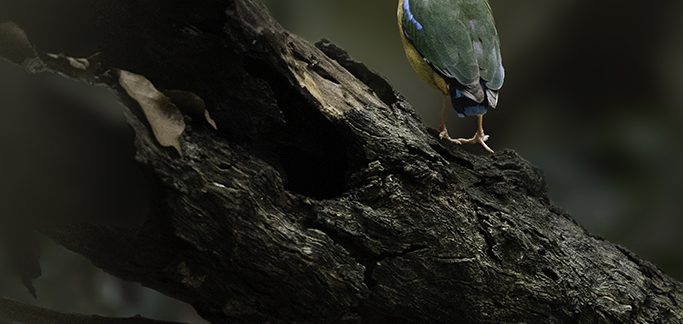
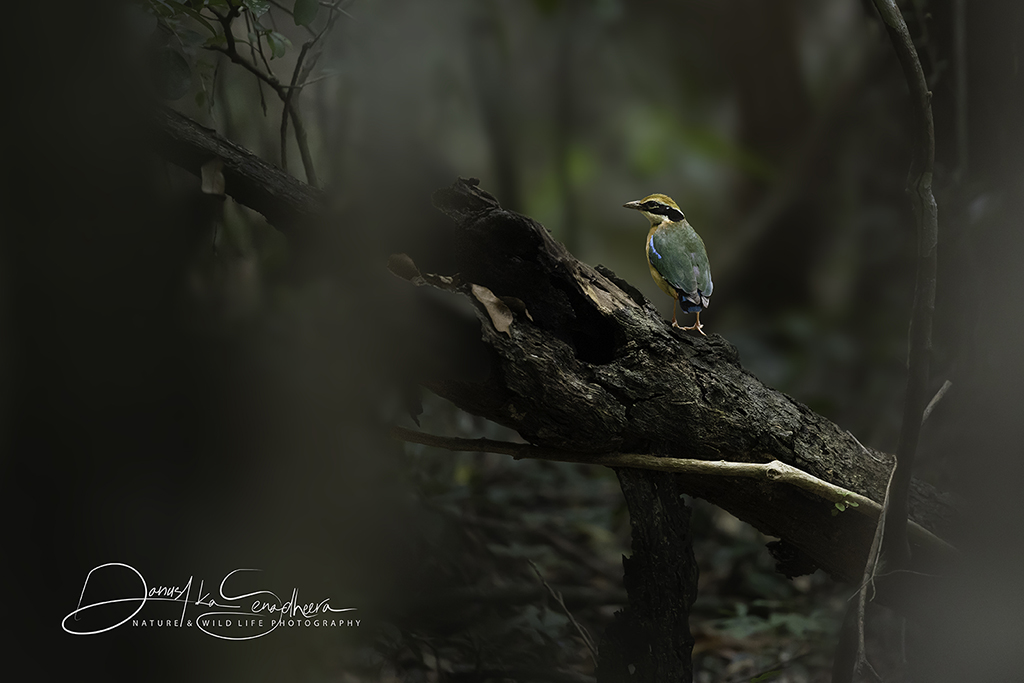
Indian Pitta at Wilpattu National Park

The Indian Pitta is one of the earliest winter migrant bird species to Sri Lanka. Its vibrant colors and unique call make it one of the best-known bird species on the island, found commonly throughout the country. Despite its abundance, photographing the Indian Pitta can be challenging due to its preferred habitat. The bird typically inhabits dense undergrowth, although it is often seen in the backyards of home gardens, hopping around in search of worms and insects. Its call is easy to mimic, and the bird responds quickly to imitations, more so than many other bird species.

This photo was taken at Wilpattu National Park. Nuwan – Wilpattu Megha Safari – spotted the Indian Pitta flying across the road and landing nearby. We spent some time searching for it, and eventually, it perched on a fallen tree, allowing us ample time to capture this beautiful habitat shot before it returned to the forest floor to feed.

#srilanka #wildlife #WildlifePhotography #birdphotography #birdwatching #bird #naturephotography #wildlifesafari #wilpattunationalpark #wilpattumeghasafari