Sri Lanka Spurfowl (Galloperdix bicalcarata)

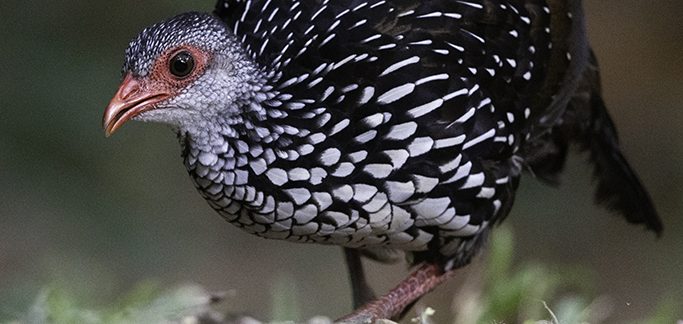
The Sri Lanka Spurfowl (Galloperdix bicalcarata) is a ground-dwelling bird species endemic to Sri Lanka, found primarily in dense forests and woodland areas. It belongs to the pheasant family, Phasianidae. The male spurfowl is distinguished by its dark brown plumage with a speckled pattern, a red facial patch, and prominent spurs on its legs, while females are duller in color with more subtle markings. Known for their shy and elusive nature, these birds are more often heard than seen, making sharp, loud calls, especially at dawn and dusk. They feed on insects, seeds, and small invertebrates, foraging in leaf litter.
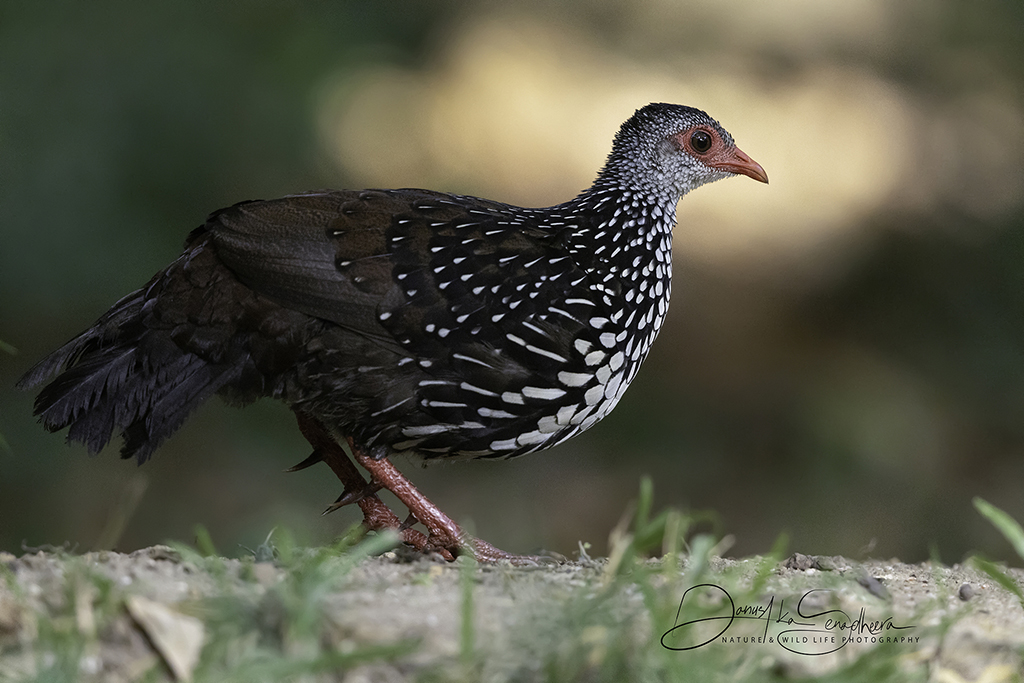
Photographing these birds in wildness is very challenging as they live in dense undergrowth with very little light supporting photography. However they are use to come to some home gardens for food near forest patches around wet-zone forests like Sinharaja, Kanneliya, Makandawa, Nilgala, etc. With proper approach we can observe and photograph these birds when they come to home gardens with better lighting conditions. This was taken during my last visit to Nilgala.
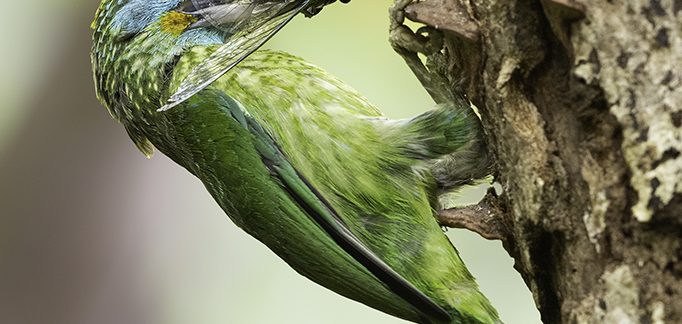
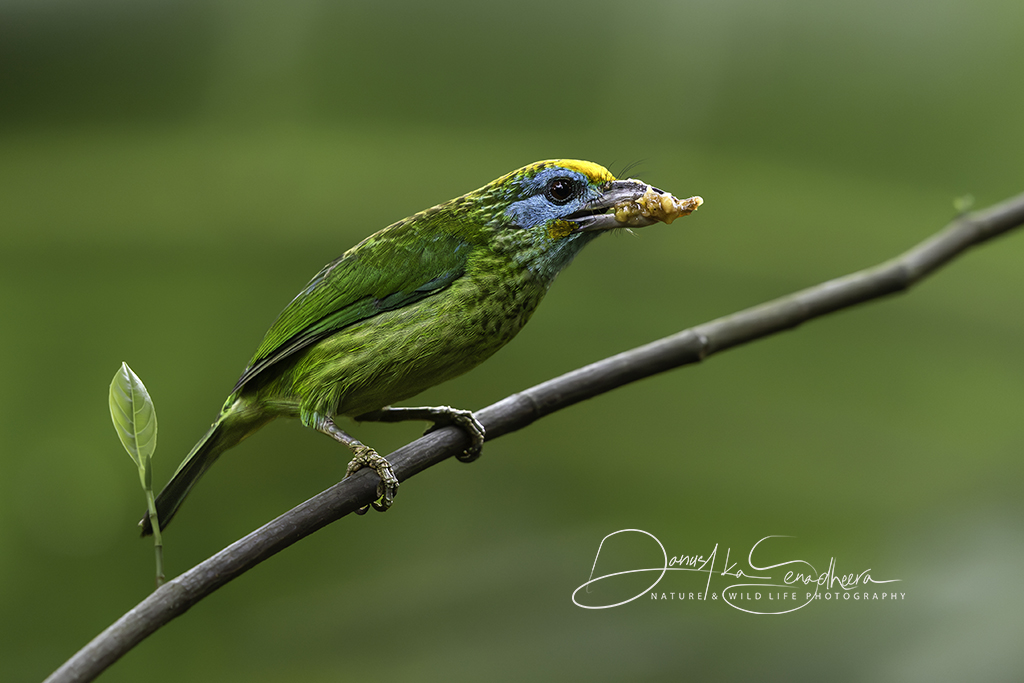
Yellow-fronted Barbet near Sinharaja Rain Forest

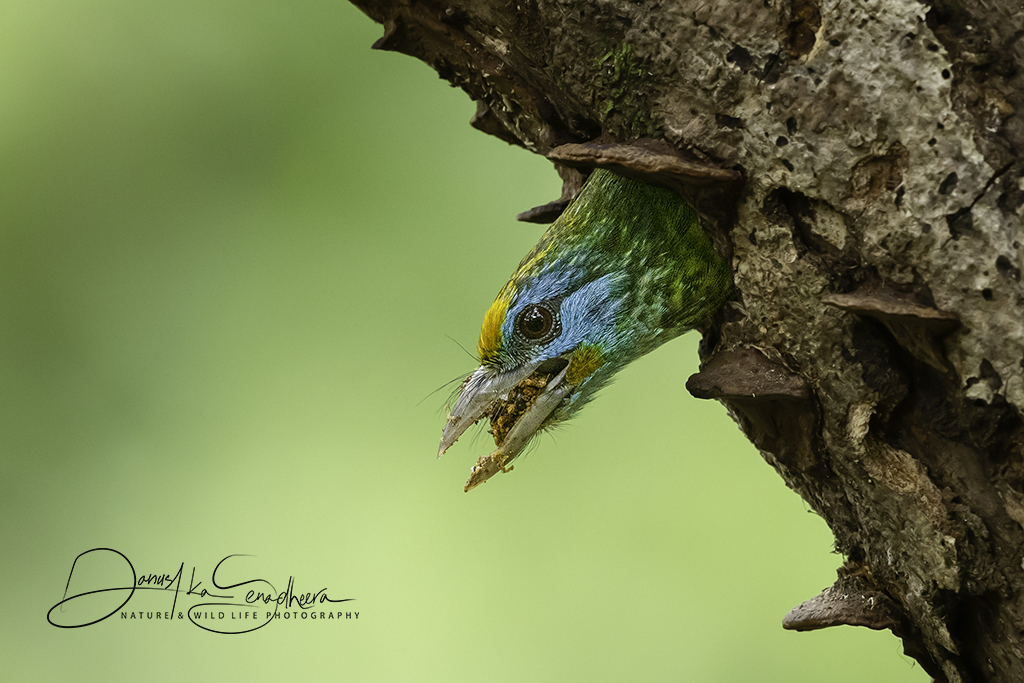
Yellow-fronted Barbet endemic to Sri Lanka

The yellow-fronted barbet is a small, endemic species in Sri Lanka, found primarily in the wet lowlands of the country. They typically appear in pairs and can be easily identified by their distinctive yellow foreheads. These birds are commonly seen in small forested areas and well-wooded home gardens, where they often visit bird feeders. Their diet mainly consists of wild berries, but when feeding their chicks, they rely on a diverse array of foods, including worms, insects, and wild berries.

Like other barbet species, yellow-fronted barbets nest in holes created in dead trees or dead tree branches. Their usual nesting period is from February to May, during which they lay 2-3 eggs. Both parents are actively involved in nesting duties, from feeding to cleaning, a process that takes about two months.

I recently encountered a nesting pair last March in a home garden near the Kudawa entrance to the Sinharaja Rainforest. By the time I arrived, the eggs had already hatched, and the parents were busy feeding their chicks. From the vantage point of an outdoor kitchen, the nest and perches were clearly visible. This position provided me with enough cover and shelter from the rain, allowing me to observe without disturbing the birds or getting wet during occasional showers. It is very important to not to disturb nesting birds due to many which could lead them abandoning nest as well as other animals destroying nests. It is always recommended to be hidden while observing nests not only from nesting birds but also from other predatory animals.

One of the parents removing waste from nest

Although the light was less than ideal due to the rainy weather, I noticed that feeding activities were more frequent during breaks in the rain. I was fortunate enough to capture some beautiful photos while enjoying a cup of tea with homemade pure jaggery, just before the sun decided to hide completely for the day. This experience was a delightful blend of nature observation and personal enjoyment, made even more special by the charming behavior of the yellow-fronted barbets.

One of the parents bring food to nest

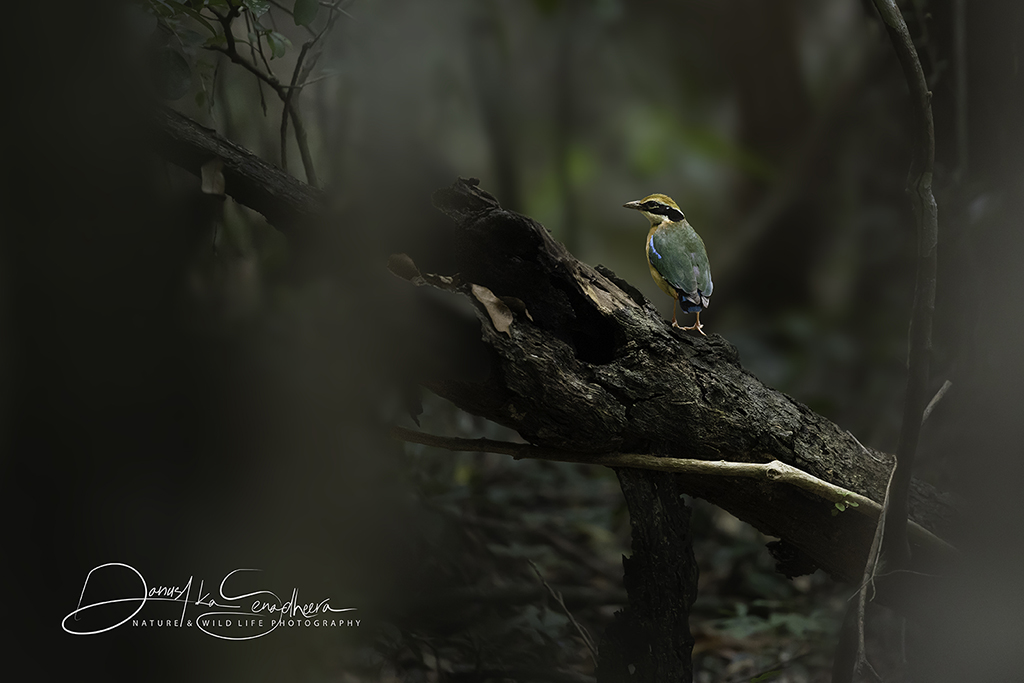
Indian Pitta at Wilpattu National Park

The Indian Pitta is one of the earliest winter migrant bird species to Sri Lanka. Its vibrant colors and unique call make it one of the best-known bird species on the island, found commonly throughout the country. Despite its abundance, photographing the Indian Pitta can be challenging due to its preferred habitat. The bird typically inhabits dense undergrowth, although it is often seen in the backyards of home gardens, hopping around in search of worms and insects. Its call is easy to mimic, and the bird responds quickly to imitations, more so than many other bird species.

This photo was taken at Wilpattu National Park. Nuwan – Wilpattu Megha Safari – spotted the Indian Pitta flying across the road and landing nearby. We spent some time searching for it, and eventually, it perched on a fallen tree, allowing us ample time to capture this beautiful habitat shot before it returned to the forest floor to feed.

#srilanka #wildlife #WildlifePhotography #birdphotography #birdwatching #bird #naturephotography #wildlifesafari #wilpattunationalpark #wilpattumeghasafari