
๐—š๐—น๐—ถ๐—บ๐—ฝ๐˜€๐—ฒ ๐—ถ๐—ป๐˜๐—ผ ๐˜๐—ต๐—ฒ ๐—™๐—ผ๐—ฟ๐—ฒ๐˜€๐˜’๐˜€ ๐—š๐—ต๐—ผ๐˜€๐˜ โ€“ ๐—ง๐—ต๐—ฒ ๐—˜๐—ป๐—ถ๐—ด๐—บ๐—ฎ๐˜๐—ถ๐—ฐ ๐—ฆ๐—ฒ๐—ฟ๐—ฒ๐—ป๐—ฑ๐—ถ๐—ฏ ๐—ฆ๐—ฐ๐—ผ๐—ฝ๐˜€ ๐—ข๐˜„๐—น

The Serendib Scops Owl (Otus thilohoffmanni) is one of Sri Lankaโ€™s most enchanting and elusive owl speciesโ€”small in size, rich in character, and a true gem for birdwatchers. Endemic to the island, it can be found in dense lowland rainforests such as Sinharaja and Kithulgala, but spotting one requires the sharp eyes and local knowledge of an experienced bird guide.

These owls are most easily observed during their breeding season, typically from February to May, when they are more vocal and active around nest sites. Serendib Scops Owls usually nest in tree cavities, and both parents are involved in rearing the chicks. The chicks are typically dependent on the adults for around 4โ€“5 weeks before they begin learning to hunt independently.

They are often seen in pairs, and if you’re lucky, you might catch a glimpse of them with their young. The chicks are paler, with a whitish to light buff coloration and a fluffier appearance compared to the adults. Adult owls are more richly rufous or dark brown, with finely marked plumage that helps them blend into the forest.

This particular individual, likely a subadult, still lacked the deep rufous tones of a mature bird. I was fortunate to observe it during my recent visit to Kithulgala earlier this monthโ€”a rare and rewarding encounter with one of Sri Lankaโ€™s most captivating nocturnal birds.

Trogon of Rainforest

It had been quite a while since my last trip to Sinharaja, as the heavy and unpredictable rains had kept me away longer than planned. During a brief break in the weather, I finally returned for some birdwatching with a friend and my regular guide, Thilak. Although we spotted a few bird flocks, photographing them was challenging due to low light and the birdsโ€™ positions high in the tree canopy.

Malabar Trogon – Female

While following one of the flocks, Thilak spotted a pair of Malabar trogonย (Harpactes fasciatus). We followed them along the trail, though, surprisingly, both birds were femaleโ€”usually, Trogons are found in male-female pairs. The male typically sports bright red plumage, while females display a softer, orange hue. One of the females paused just long enough on a bare tree branch, framed by leaves, giving me a perfect opportunity to capture this beautiful shot.

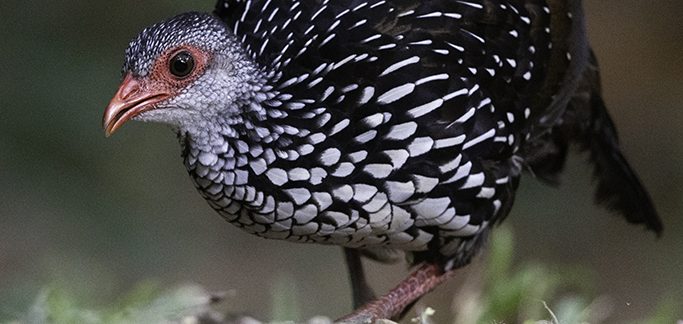
Sri Lanka Spurfowl (Galloperdix bicalcarata)

The Sri Lanka Spurfowl (Galloperdix bicalcarata) is a ground-dwelling bird species endemic to Sri Lanka, found primarily in dense forests and woodland areas. It belongs to the pheasant family, Phasianidae. The male spurfowl is distinguished by its dark brown plumage with a speckled pattern, a red facial patch, and prominent spurs on its legs, while females are duller in color with more subtle markings. Known for their shy and elusive nature, these birds are more often heard than seen, making sharp, loud calls, especially at dawn and dusk. They feed on insects, seeds, and small invertebrates, foraging in leaf litter.
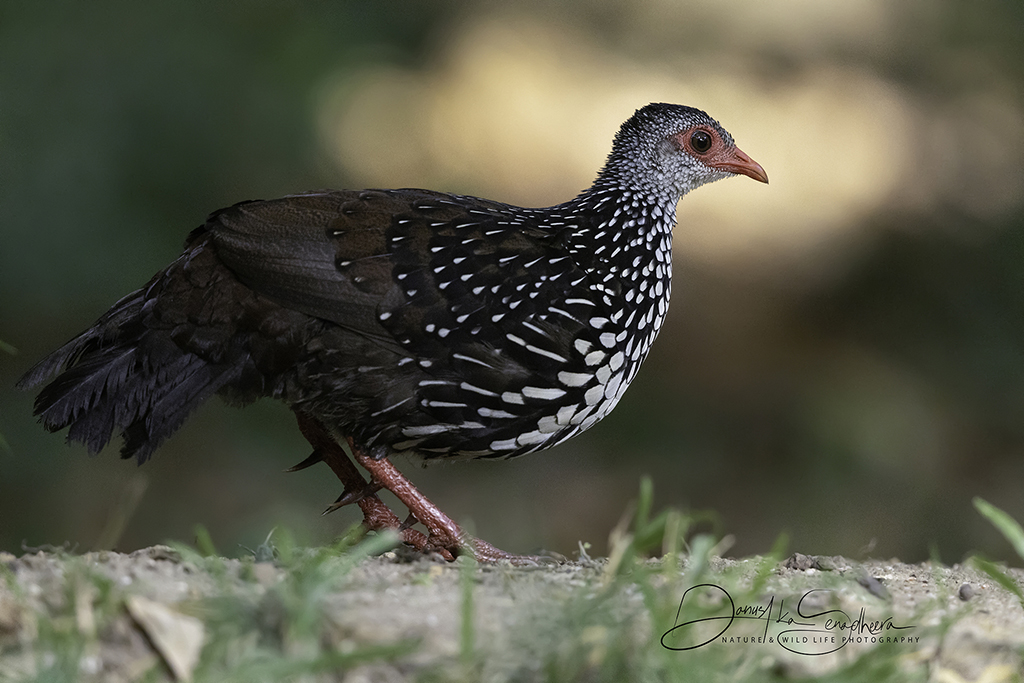
Photographing these birds in wildness is very challenging as they live in dense undergrowth with very little light supporting photography. However they are use to come to some home gardens for food near forest patches around wet-zone forests like Sinharaja, Kanneliya, Makandawa, Nilgala, etc. With proper approach we can observe and photograph these birds when they come to home gardens with better lighting conditions. This was taken during my last visit to Nilgala.